
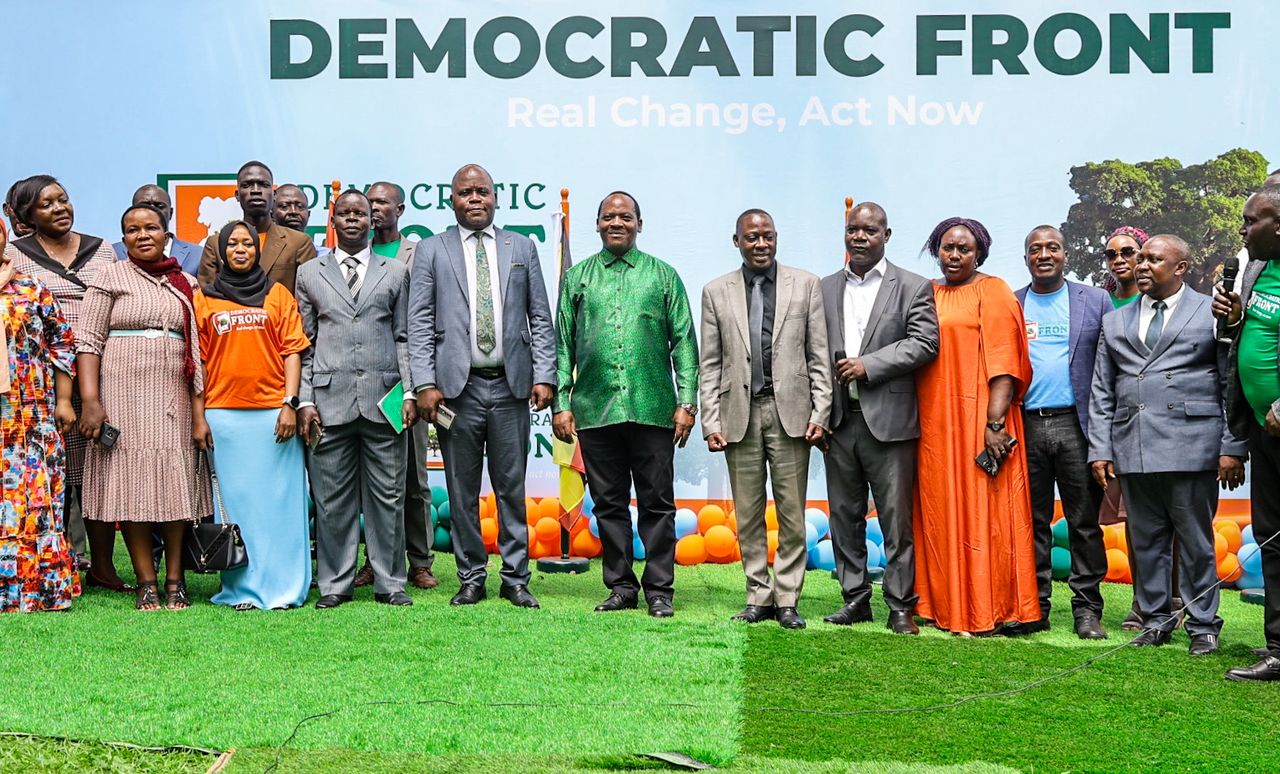
In a remarkable display of political organization and ambition, the Democratic Front (DF) is poised to enter the upcoming general elections with a determination that belies its infancy.
Officially launched on June 26, 2025, just weeks after receiving its registration certificate from the Electoral Commission on May 6, the DF has swiftly positioned itself not as an underdog, but as a formidable contender in Uganda’s complicated political field.
The party’s leadership has demonstrated a commitment to a mature and principled approach to governance, setting the stage for its inaugural participation in the electoral fray beginning November 10, 2025.
The issuance of the certificate on May 6 marked a critical turning point for the DF, validating its formation under the Political Parties and Organizations Act.
Open Delegates’ Conference
This provided the framework for the party to operate legally and engage in the political process. Just weeks later, the party launched itself into the national consciousness with a two-day event that galvanized over 700 delegates from around the nation.
The delegates conference held on June 27 not only confirmed Mathias Mpuuga as the inaugural president but also established the DF National Executive Committee, reflecting an organized structure ready to tackle Uganda’s pressing political challenges.
What sets the DF apart is its commitment to internal democracy, a stark difference from other parties that often suffer from a ‘strong-man syndrome.’
The party organs are fully functional, and every significant decision is processed through proper channels.
Most notably, the party oversaw its internal electoral processes with the help of its Electoral Commission, allowing a wide array of aspirants to transparently express their interest in various elective positions.
This collective and inclusive decision-making framework has instilled a sense of confidence among party members and supporters alike.
NEC Resolution Binds All
On September 20, 2025, during a critical national council meeting at the DF headquarters in Namirembe, Kampala, a unanimous decision was made not to field a presidential candidate for the upcoming elections.
This decision was based on the belief that engaging in a flawed electoral process, characterized by predetermined outcomes, would only lend credibility to a system viewed as rigged in favor of the incumbent, Yoweri Museveni.
Mpuuga explained, “Since 1996, presidential elections have been organized in a way that favors a particular candidate. The elections have become a ritual with pre-determined results. Participating in them without addressing their flaws only legitimizes a sham process.”
This stance reflects a strategy to avoid the “biggest tragedy” faced by many opposition parties that rush into elections without proper reflection and planning.
The DF aims to leverage this time for introspection, allowing the party to focus on demanding stricter reforms from the electoral commission, such as a cleaner voters’ register.
“As opposition parties, we must demand key reforms starting with a clean voters’ register. Votes are stolen because we have multiple registers,” Mpuuga asserted.
Spreading Wings
Since its launch, the Democratic Front has aggressively sought to establish its political presence across the country.
The party’s leadership, reflecting on the dire need for political unity among opposition groups, has mobilized support, resulting in a diverse representation of candidates in various regions, including Greater Masaka, Teso, Buganda, and Kampala and metropolitan areas, and Greater Mpigi, Greater Mubende, Greater North, Busoga sub-region.
With the lowest expression of interest fees set at Shs10,000, the DF has made participation accessible, encouraging a rush of candidates eager to challenge for parliamentary and local government seats.
Meeting Nomination Fees
Moreover, the DF has distinguished itself by committing to covering nomination fees for its candidates at the parliamentary level and providing financial assistance for local government representatives. This proactive approach has set the party apart from others, many of which have struggled to hold transparent processes or provide similar support to their candidates, despite having strong financial muscles having been beneficiaries of the IPOD funding.
Despite the challenges posed by a disinformation campaign from some of the opposition actors and mainstream government aiming to undermine its credibility, the DF has attracted enthusiastic support from the public who see in it a potential catalyst for change.
The party’s ability to field a significant number of candidates within such a short timeframe has generated excitement among its grassroots supporters and raised concerns among its critics.
Future Priorities
As the DF prepares to formally enter the political contest whose open campaigns begin officially on October 10, 2025, it does so not merely intend to fill seats but to infuse the political environment with ethical standards and an emphasis on disciplined public service.
With five sitting MPs and a resolute vision for governance, the DF is determined to break from the past and strive for a future where Ugandan citizens can experience a genuine electoral transition of power.
In summary, the Democratic Front, born from a need for renewal among opposition forces, is ready to engage with vigor and purpose in the 2026 general elections, and as it stands on the cusp of its maiden electoral battle, the DF embodies a fresh ideology and approach to leadership, resonating with those who yearn for a democratic transformation in Uganda.
